
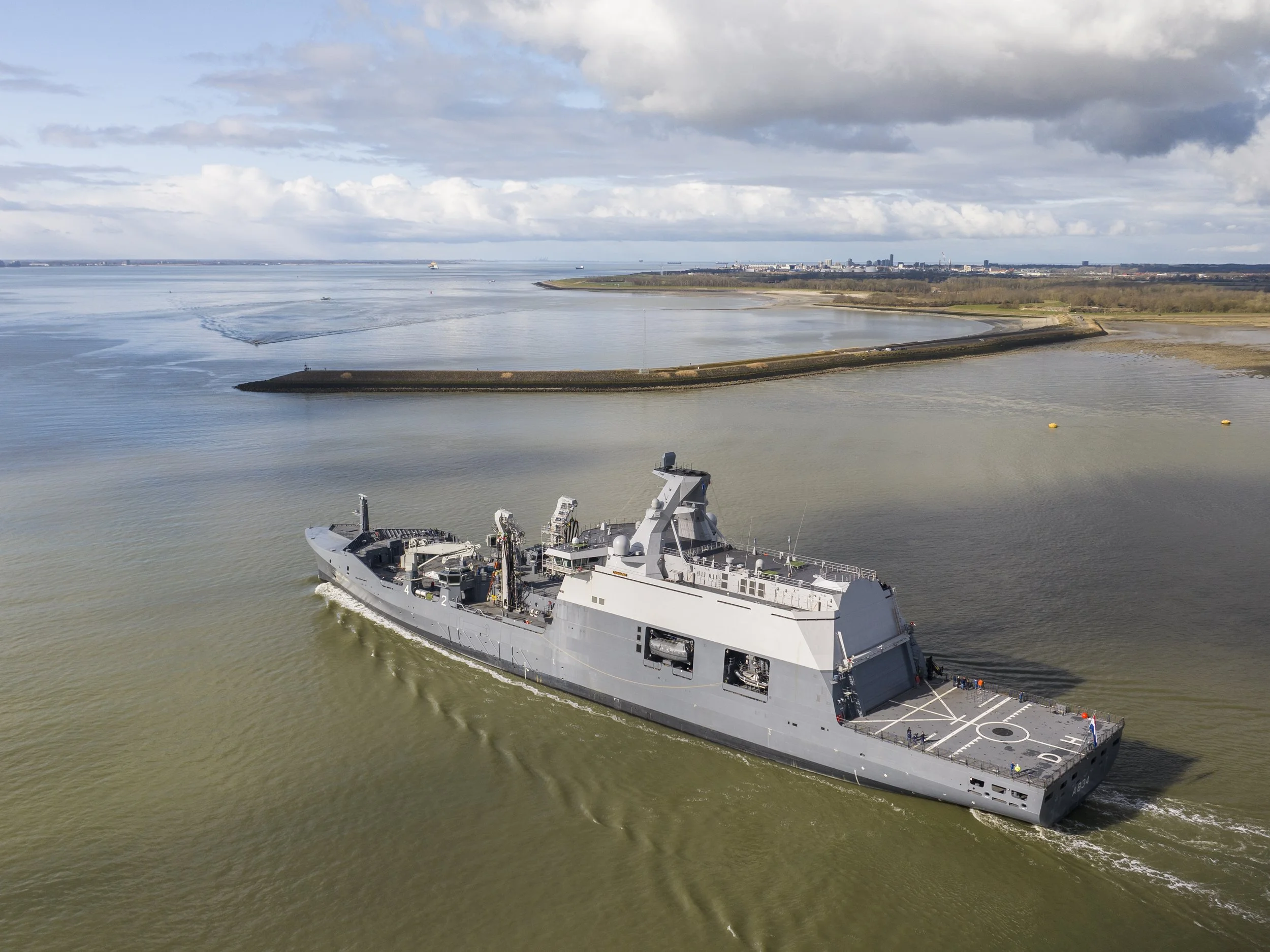
Port of Vlissingen & North Sea Port
Drone operations,
film production & photography
At the edge of the North Sea, where naval construction meets cross-border logistics.
Portside Media operates across Vlissingen, Terneuzen, and Ghent—documenting vessels, terminals, and offshore operations in Europe's maritime gateway.
OPERATIONAL CONTEXT
Where the Netherlands Meets the North Sea
The Port of Vlissingen and the wider North Sea Port complex occupy a unique position—geographically, operationally, and strategically. Vlissingen sits at the mouth of the Westerschelde estuary, serving as the North Sea access point for one of Europe's most important inland waterway systems connecting the Netherlands, Belgium, and beyond.
This isn't the industrial density of Rotterdam or the urban complexity of Amsterdam. Vlissingen offers something different: open horizons, direct North Sea access, and a sense of remoteness that defines the Zeeland maritime landscape. Yet operationally, it's as complex as any European port—home to Damen Naval's primary shipbuilding facilities, offshore wind staging areas, specialized cargo terminals, and cross-border logistics connecting Terneuzen and Ghent.
For Portside Media, Vlissingen represents a different operational environment—less congested airspace but equally strict access requirements, maritime operations shaped by tidal windows and North Sea weather, and a visual setting that conveys scale and isolation in ways other Dutch ports cannot.
OUR VLISSINGEN & NORTH SEA PORT EXPERIENCE
Naval, Offshore, and Cross-Border Operations
Portside Media operates regularly throughout the Port of Vlissingen and North Sea Port complex, documenting:
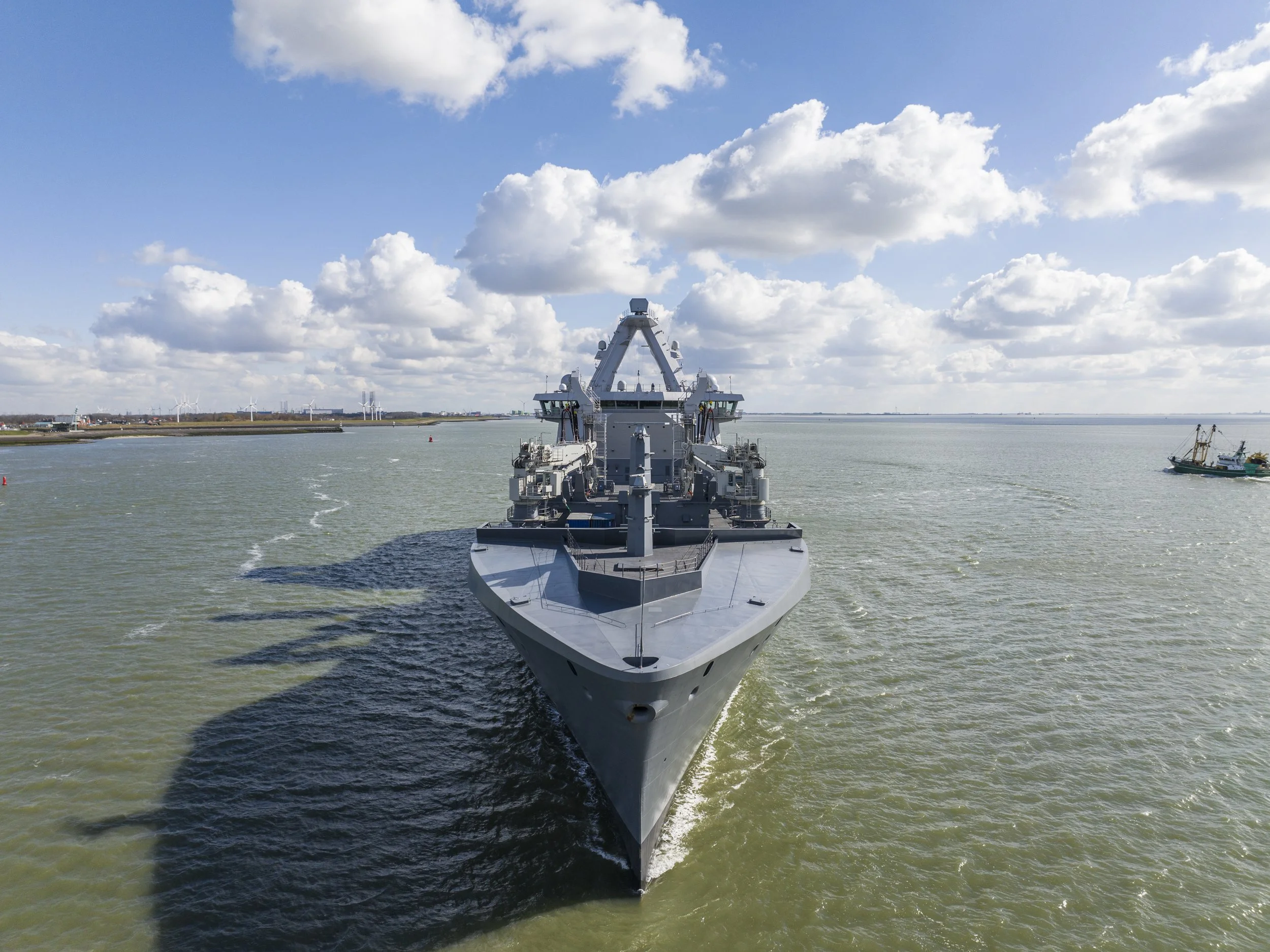
Naval vessel construction – Documentation of defense vessels under construction at Damen Naval facilities
Vessel arrivals and departures – Ships entering and leaving the Westerschelde, pilot boarding, berthing operations
Vessel christening and delivery ceremonies – Formal events marking vessel launches and handovers
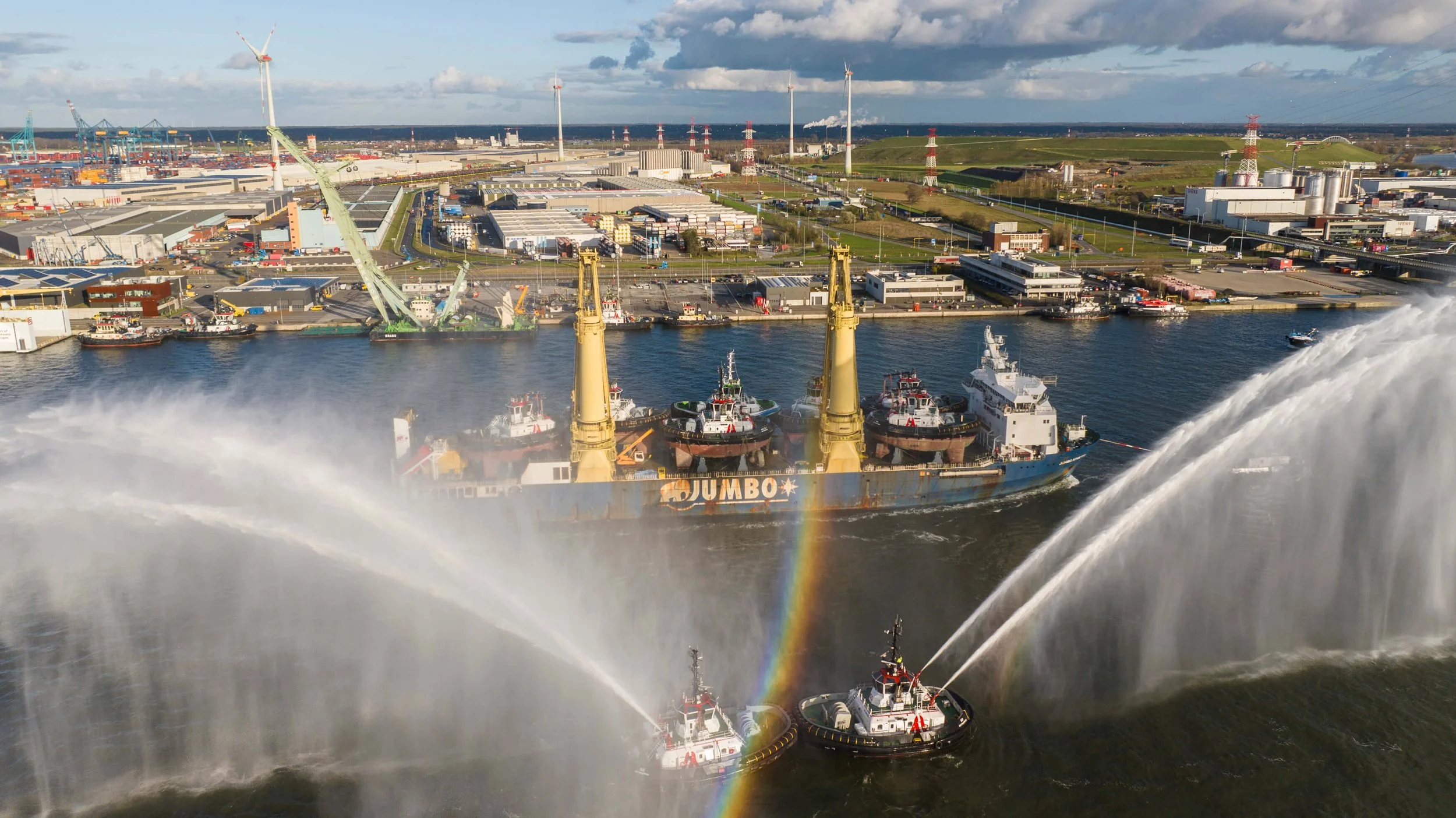
Offshore wind operations – Component staging, vessel mobilization, and North Sea deployment
Terminal operations – Cargo handling across specialized terminals in Vlissingen, Terneuzen, and Ghent
Cross-border logistics – Inland vessel movements along the Westerschelde and Ghent-Terneuzen Canal
Marine construction – Port expansion, infrastructure development, dredging operations
Our work spans the full North Sea Port geography—from Vlissingen's seaward terminals to Terneuzen's industrial zones and Ghent's inland facilities. This cross-border operational area demands understanding of both Dutch and Belgian port regulations, airspace coordination, and the logistics that connect these nodes.
SERVICES FOR VLISSINGEN & NORTH SEA PORT
What We Document
Naval & Shipbuilding:
Naval vessel construction and outfitting
Sea trials and delivery documentation
Yard operations and facility expansion
Defense-related documentation with appropriate security protocols
Offshore & Heavy-Lift:
Offshore wind component logistics and staging
Vessel mobilization for North Sea operations
Specialized cargo handling and transport
Subsea equipment staging and deployment
Terminal & Cargo Operations:
Dry bulk and liquid cargo handling
Ro-Ro operations and vehicle logistics
Container terminal operations (Terneuzen/Ghent)
Project cargo and oversized load transport
Cross-Border Logistics:
Inland vessel movements and canal operations
Lock operations and waterway transits
Multi-modal transport coordination
Port-to-port documentation across Vlissingen-Terneuzen-Ghent corridor
AIRSPACE & PERMIT REQUIREMENTS
Less Congested, Still Controlled
Unlike Rotterdam or Amsterdam, Vlissingen's airspace is not complicated by major airport CTR zones. However, this doesn't mean unrestricted access. Port of Vlissingen and North Sea Port maintain strict control over drone operations within port property and operational zones.
Portside Media's EASA Specific Category certification is required for operations here. Standard recreational or basic commercial drone authorizations are insufficient for port access.
What this means:
We coordinate directly with North Sea Port Authority for operational permissions
Naval facilities require additional security clearances and protocols
Cross-border operations may involve both Dutch and Belgian regulatory coordination
Offshore operations near the coast require awareness of military exercise zones and shipping lanes
Typical approval timeline: 2-3 business days for standard port operations; additional time may be required for naval or defense-related work.
The advantage: Less airspace congestion means more operational flexibility—but port authority coordination is still mandatory and strictly enforced.
WHY OPERATIONAL FLUENCY MATTERS IN VLISSINGEN
Remote Doesn't Mean Simple
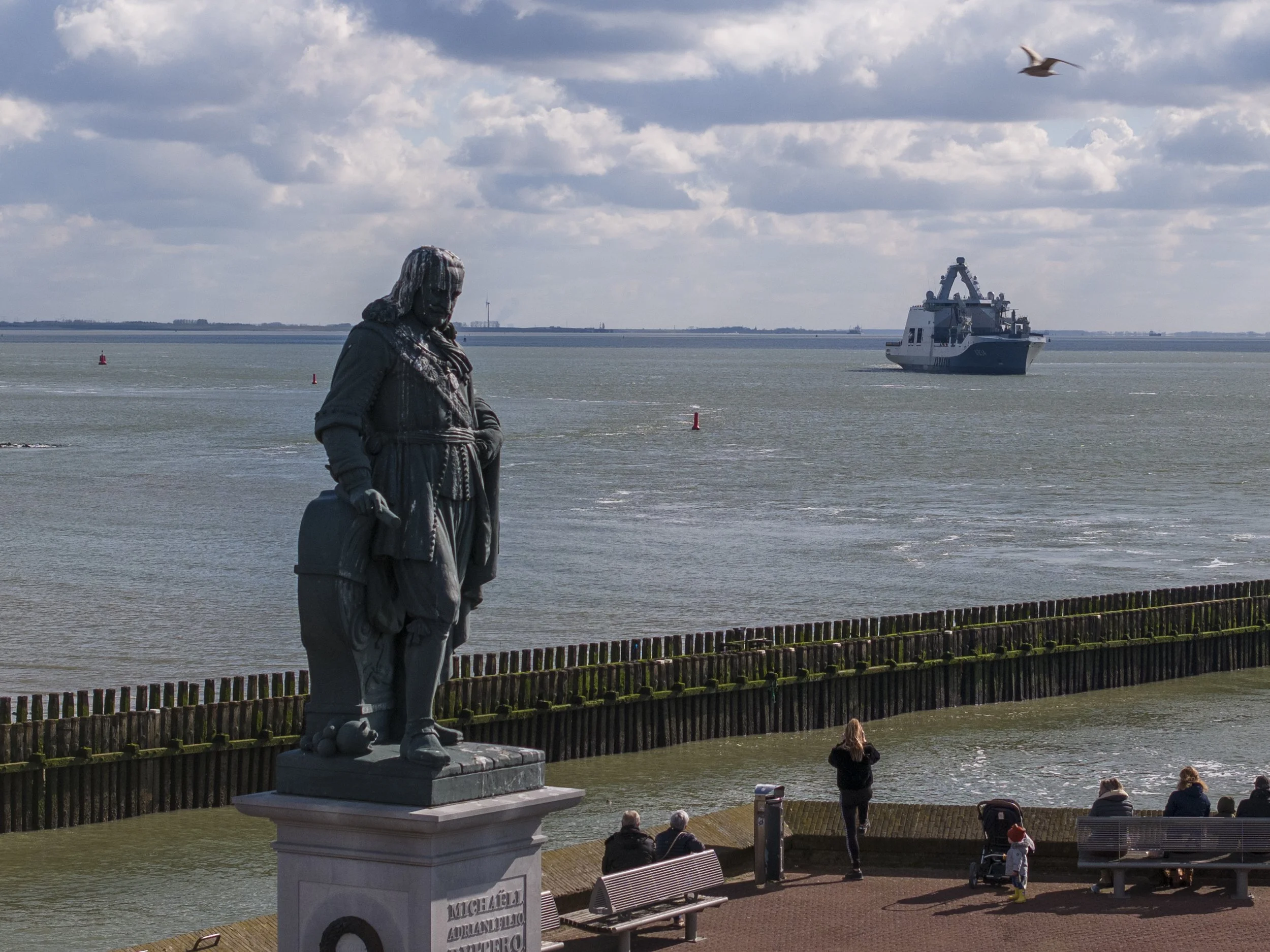
Vlissingen's remote coastal location creates a perception that operations here are simpler than Rotterdam or Amsterdam. The reality is different.
Operational challenges specific to Vlissingen:
Tidal constraints – The Westerschelde's significant tidal range affects vessel movements, lock schedules, and operational windows
North Sea weather – Coastal exposure means wind, visibility, and precipitation can change rapidly
Naval security protocols – Working near or within Naval facilities requires clearances, escorts, and awareness of restricted zones
Cross-border coordination – Projects spanning Vlissingen-Terneuzen-Ghent require understanding of both Dutch and Belgian regulations
Limited local support infrastructure – Remote location means self-sufficiency is essential; equipment failures or weather delays have fewer backup options
Our operational fluency here means understanding these constraints and planning accordingly—bringing backup equipment, monitoring weather systems moving in from the North Sea, coordinating tidal windows with vessel schedules, and maintaining relationships with port authority and naval facility staff that enable efficient clearance processes.
WORKING WITH PORTSIDE MEDIA IN VLISSINGEN
What to Expect
Initial Discussion:
Project scope and operational context
Naval or defense-related security requirements (if applicable)
Tidal and weather window planning
Cross-border coordination needs (if spanning multiple locations)
Pre-Production:
North Sea Port Authority clearance
Naval facility permissions and security protocols (if applicable)
Weather system monitoring and contingency planning
Backup equipment and self-sufficiency preparation
On-Site Operations:
Safety briefings and protocol adherence
Coordination with port authority, terminal operators, or naval facility staff
Real-time weather monitoring and operational adjustments
Communication with your team throughout operations
Post-Production & Delivery:
Editing and grading to your specifications
Format delivery (web, broadcast, presentations, archival)
Standard turnaround: 3-5 business days
Expedited delivery available for time-sensitive projects
FAQs
Can drones fly within North Sea Port and Port of Vlissingen?
1
Yes, but only with EASA Specific Category certification and advance coordination with North Sea Port Authority. Unlike Rotterdam or Amsterdam, North Sea Port does not fall within a major airport CTR zone — but this does not mean unrestricted access. Commercial drone operations within North Sea Port boundaries require formal authorization from the port authority and compliance with Dutch and Belgian airspace regulations depending on operational location. Portside Media holds EASA Specific Category certification (NLD-OAT-176/01G) covering operations throughout the North Sea Port complex including Vlissingen, Terneuzen, and the Belgian Ghent terminals. Standard Open Category drone authorizations are insufficient for commercial port operations here.
Do drone operations near Damen Naval facilities in Vlissingen require special clearances?
2
How does North Sea weather affect drone and filming operations in Vlissingen?
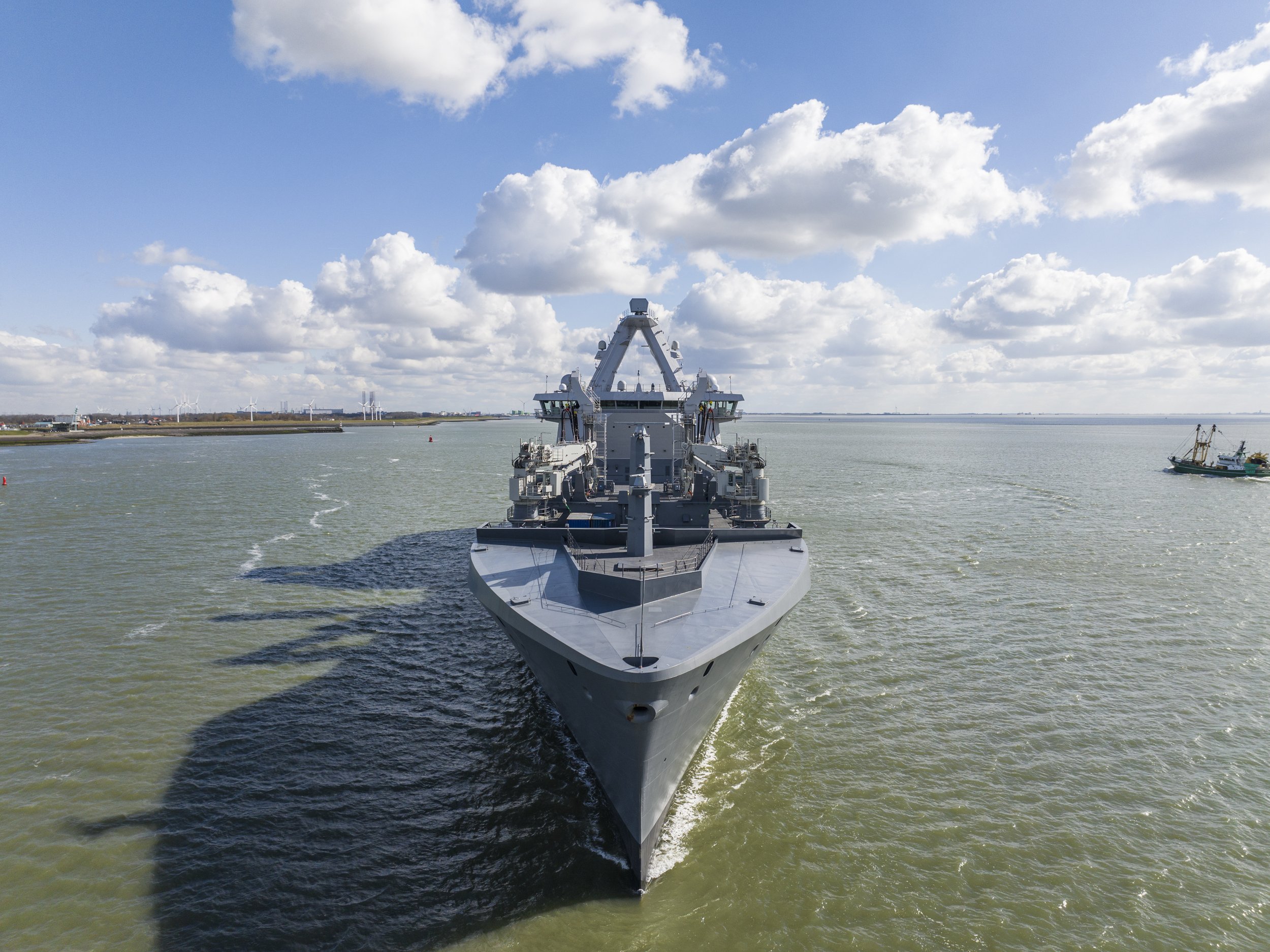
Yes. Damen Naval's Vlissingen shipyard operates under stricter access and security protocols than standard commercial port environments. Defense-related construction means additional security briefings, escorted site access, and awareness of restricted zones around active naval assets. The level of clearance required depends on project proximity to active naval construction, vessel readiness status, and facility security posture at the time of filming. Portside Media has direct experience working within Damen Naval's Vlissingen facility — including documentation of the CSS Den Helder christening ceremony and departure following Princess Amalia's visit. We recommend discussing naval facility requirements during initial project planning to allow adequate lead time for security coordination, typically a minimum of two weeks for defense-adjacent work.
How do tidal conditions in the Westerschelde affect filming schedules?
3
The Westerschelde estuary has one of the most significant tidal ranges in the Netherlands — up to 5 meters between high and low water in some locations. This directly controls vessel movements, lock schedules at Terneuzen and Vlissingen, and berthing windows throughout the port. Unlike Rotterdam's Nieuwe Waterweg or Amsterdam's North Sea Canal, tidal timing here is non-negotiable — vessels move when the tide allows, not when lighting conditions are ideal. Portside Media plans all Vlissingen and North Sea Port assignments around published tidal charts, vessel movement windows, and lock schedules. We build contingency time into every project timeline for weather or tidal delays, and communicate realistic filming windows to clients during the planning phase rather than on arrival.
Vlissingen sits directly at the North Sea entrance of the Westerschelde — one of the most exposed coastal locations in the Netherlands. Wind speeds here regularly exceed inland port environments, and North Sea weather systems arrive with little warning. Drone operations are limited by wind speeds above 12-15 m/s and minimum visibility requirements, and Vlissingen's coastal exposure means these thresholds are reached more frequently than at Rotterdam or Amsterdam. Portside Media monitors dedicated North Sea marine weather forecasts, KNMI coastal warnings, and real-time port wind data during project planning and on-site operations. We arrive self-sufficient — backup equipment, alternative shooting positions, and flexible day structure — because remote coastal locations offer fewer contingency options than urban port environments when conditions deteriorate.
For standard commercial port operations, 3-5 business days provides sufficient time for North Sea Port Authority coordination and airspace filing. Vessel arrival and departure documentation can often be arranged within this window provided vessel schedules are confirmed. Naval facility work at Damen Naval requires a minimum of two weeks due to security clearance and escorted access protocols. Cross-border projects spanning Dutch and Belgian port sections also benefit from two weeks planning time given dual-jurisdiction coordination requirements. For scheduled events — vessel christenings, sea trial departures, commissioning ceremonies — we recommend 2-3 weeks advance engagement to coordinate access, security, and operational logistics around the event programme.
Can you operate across both the Dutch and Belgian sections of North Sea Port?
4
How far in advance do you need to plan a project at North Sea Port or Vlissingen?
5
6
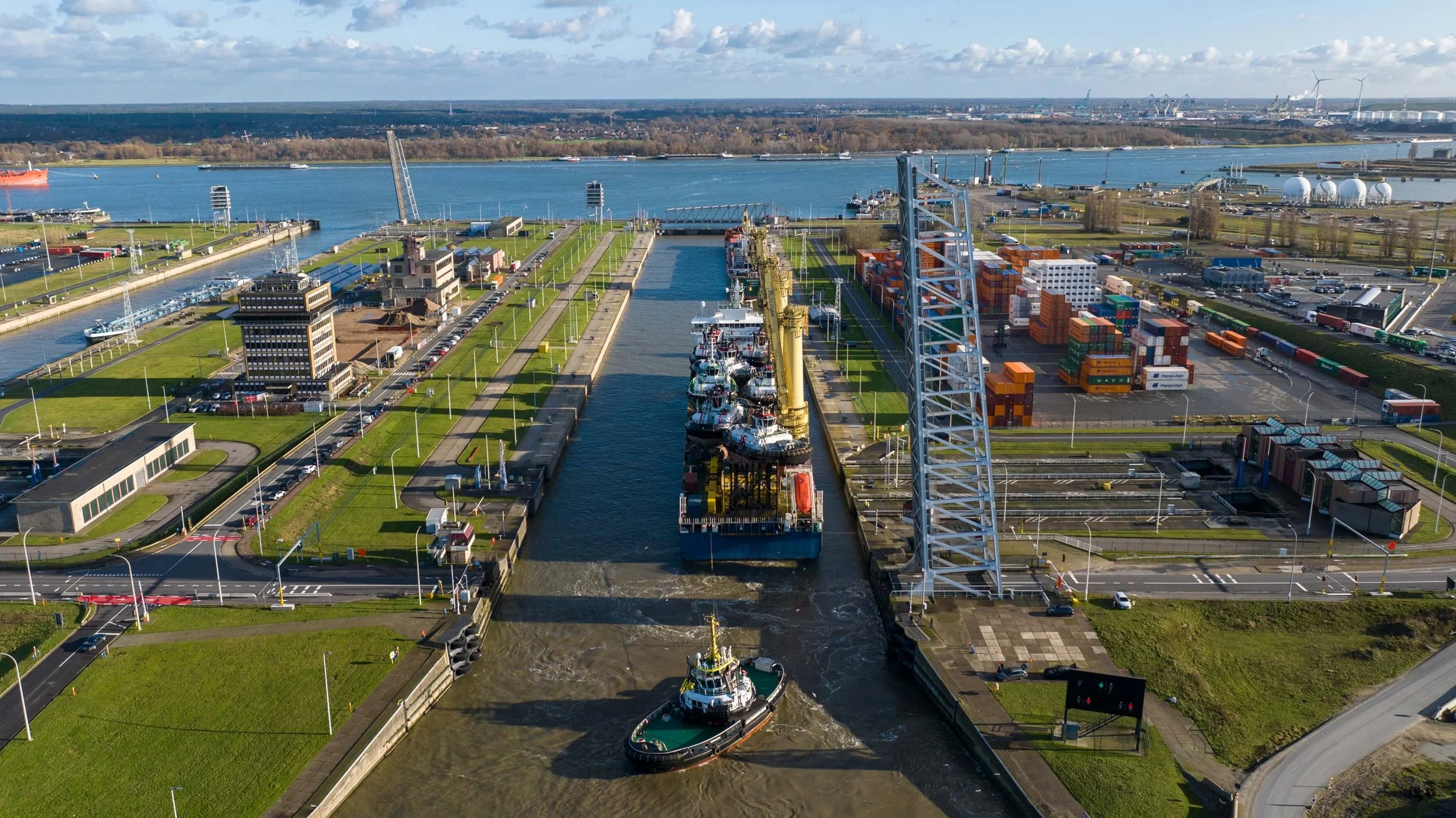
Yes. North Sea Port operates across the Dutch-Belgian border, covering Vlissingen and Terneuzen in the Netherlands and Ghent in Belgium. Cross-border drone operations require coordination with both Dutch aviation authorities and Belgian aviation authorities, in addition to North Sea Port Authority permissions across both national sections. Portside Media manages this dual-regulatory coordination as part of standard project planning for cross-border assignments. We've completed multi-location operations spanning the Westerschelde and Ghent-Terneuzen Canal corridor — including documentation of Damen tug deliveries transiting through Terneuzen locks and arriving at Port of Antwerp. Cross-border projects typically require additional planning time of 3-5 business days to coordinate approvals across both jurisdictions.
RELATED PROJECTS
Ready to Document Your Vlissingen or North Sea Port Operations?
Whether you're launching a naval vessel, staging offshore equipment, documenting terminal expansions, or covering cross-border logistics—Portside Media brings the certification, operational experience, and local knowledge to deliver in Zeeland's maritime environment.