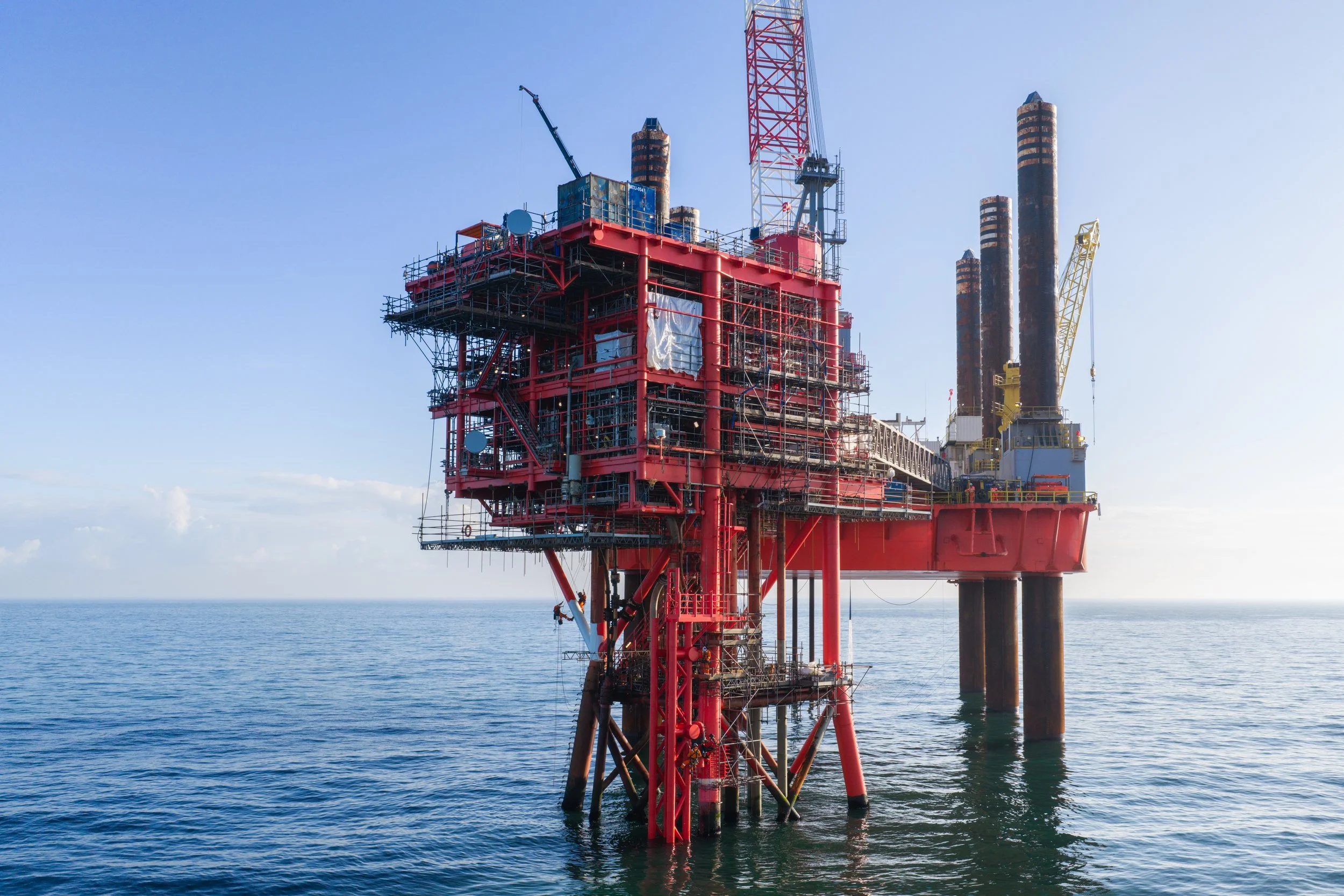
Offshore filming takes a different approach than a shoot on land. In July 2026 we spent two days in the North Sea for Porthos, the project that stores CO₂ from the Port of Rotterdam in depleted gas fields under the seabed. We filmed on the P18-A platform and the Valaris 123 jack-up rig. It was our first offshore production. The brief: six short interview films with the people behind the project, made for LinkedIn and external communication.
This is how that shoot came together, what working on a platform demands of a film crew, and what we would tell anyone planning an offshore shoot of their own.
The Porthos project and the brief
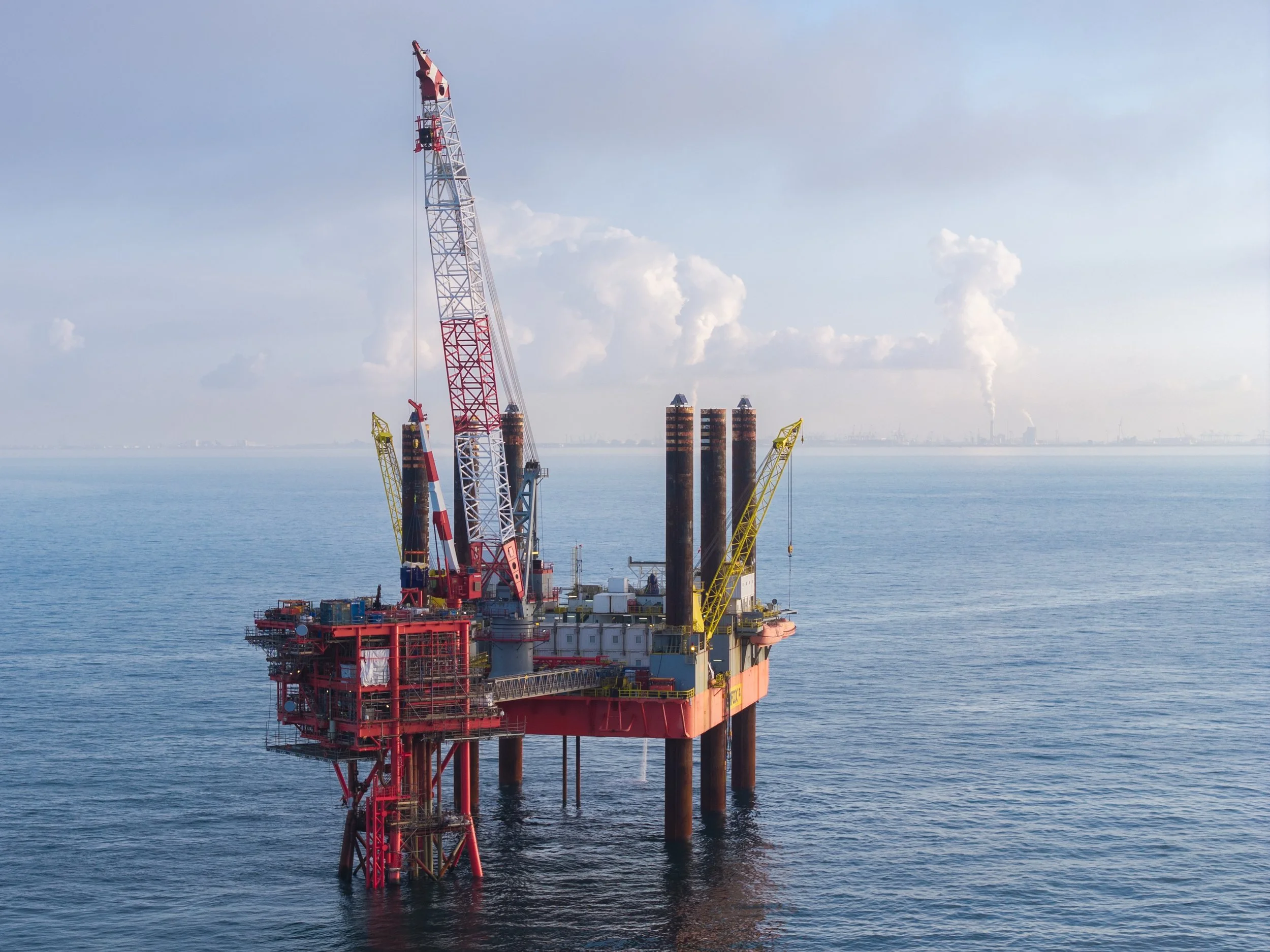
Porthos transports CO₂ from industry in the Port of Rotterdam to depleted gas fields under the North Sea, a form of carbon capture and storage (CCS). P18-A, a former gas production platform off the coast, is being converted to inject that CO₂ deep below the seabed. During our visit the Valaris 123 jack-up rig stood alongside the platform for the well work.
The communications team wanted to show the people behind this work, not only the steel. The brief: interview six key figures on location and turn each interview into a film of 1.5 to 2.5 minutes. The films had to work on LinkedIn, so every one needed a clear human hook in the first seconds and a story that holds without heavy technical detail.
Filming on an offshore platform: what to plan for
An offshore installation is a working site where the operation always comes first. A film crew is a guest, and that shapes every decision.
Time is fixed. You are on board for a set period, with transfers planned around the operation and the weather. There is no coming back tomorrow for a missed shot, so the shot list and interview schedule have to be ready before you leave the quay.
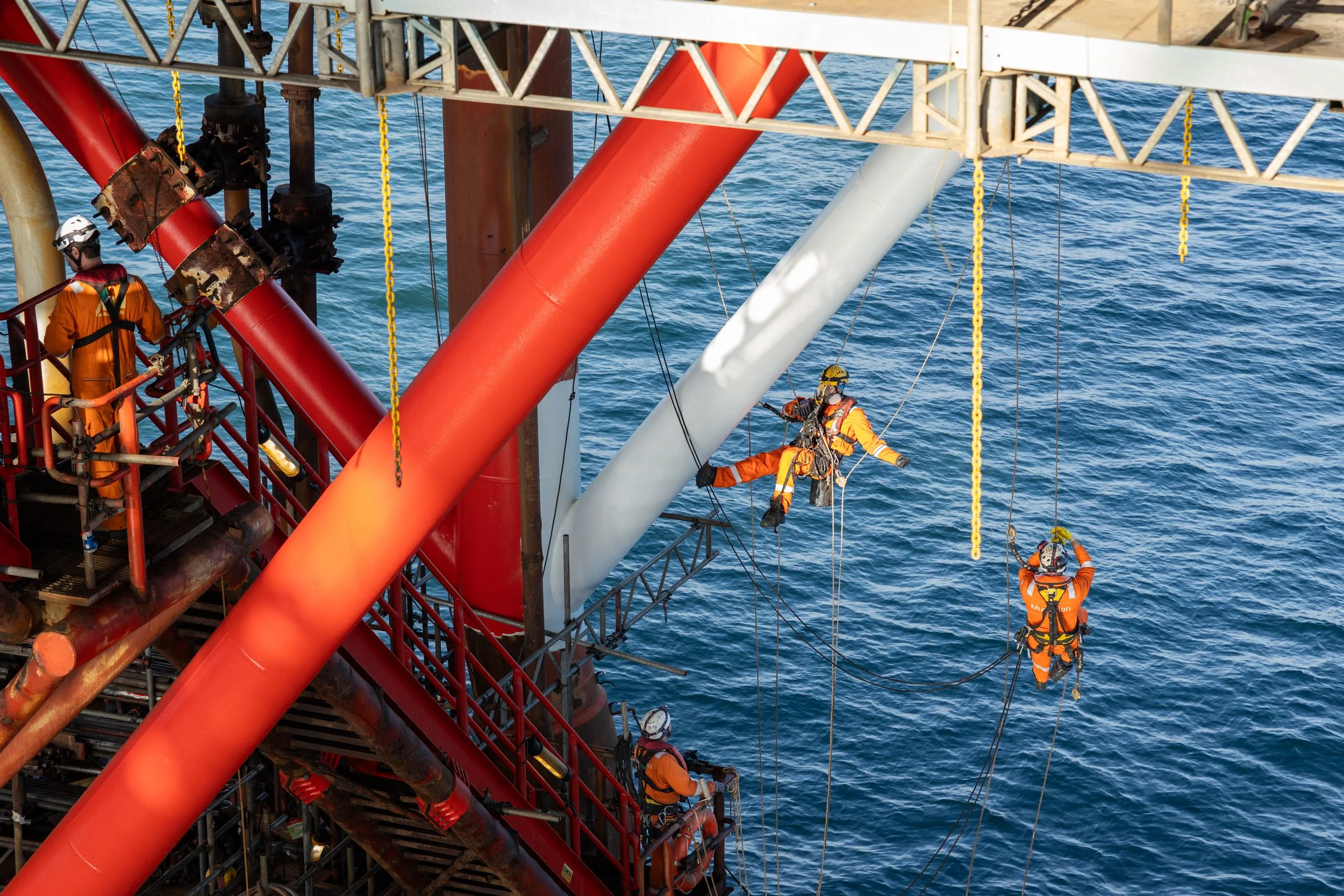
Safety rules everything. Offshore safety training, inductions on arrival, permits for where you can stand and when. Every location on deck is agreed with the people running the work.
Kit has to be lean. Everything you bring is weighed, registered and carried. We travel with a compact interview setup that still gives clean sound and good light in noisy, windy and cramped spaces.
The environment fights back. Wind, generator noise, reflective steel and changing light. Interview spots are chosen as much for sound as for the view behind the person.
Interviewing people on a working rig
The six people we interviewed are engineers, managers and specialists, not presenters. Most of them had a shift to get back to. We kept the setup quick and the conversation relaxed, and filmed each interview in their own working environment so the location tells part of the story.
We asked the same core questions to everyone, which made the edit easier later. Where an answer came out too technical or too long, we simply asked again. The second take is often the one people tell the way they would to a friend, and that is the version that works on LinkedIn.
Between interviews we filmed the work itself: the rig, the platform, the crew and the sea around it. That footage gives each film its rhythm and shows the scale of the project behind the person talking.
The result: six films and national media coverage
Back on shore we built a paper edit for each interview, selecting the strongest quotes per question with timestamps, before cutting. After a feedback round with the Porthos communications team, we tightened every film to around two and a half minutes or less, with the most personal moment saved for the end.
The footage went further than planned. Later in the year, national media used our offshore material: the Volkskrant in an online reportage and the NOS in its main evening news. For a project that is hard to visit, original footage from the platform itself turned out to be valuable well beyond the client's own channels.
Planning an offshore video shoot: what we learned
If you are planning to film on an offshore installation, these points make the difference:
Start with the crew's paperwork. Offshore safety training and medicals take time to arrange. Check what the installation requires before you pick a date.
Agree on the stories before you go. Know who you will interview, what each person should say in one sentence, and which questions everyone gets.
Plan for less time than you think. Transfers, inductions and the operation all take their share. Build a schedule with a priority order, so the essential shots are done first.
Think about media use upfront. Offshore footage is rare. Agree on rights and licensing before the shoot, so it is clear what the client can use and what happens when press ask for it.
Keep the films human. On LinkedIn, people stop for a person and a story, not for a platform. Let the technology be the backdrop.
Frequently asked questions
What training does a film crew need to work offshore?
Most installations require offshore safety training such as BOSIET and a valid offshore medical. Each site adds its own induction on arrival.
Can you fly a drone on an offshore platform?
Sometimes, with the platform operator's approval and a site-specific risk assessment. It depends on the installation, helicopter operations and the operator's authorisation.
How long does an offshore shoot take to prepare?
Plan several weeks. Crew training, transfer slots and approvals from the installation take longer than the filming itself.
What determines the price of an offshore video production?
The number of days on board, the size of the crew, the training required, the number of films and the editing. Send your project and planning for a concrete quote.
Planning a film on an offshore project?
Portside Media produces corporate films, interviews and drone footage in ports and offshore. We bring the safety certificates, the lean kit and the experience of working where the operation comes first. Our crew holds VCA and BOSIET offshore safety training.
See our film production work, read what it takes to fly a drone in the Port of Rotterdam, or get in touch to talk about your project.